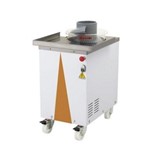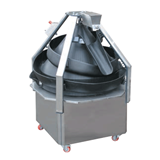


Key takeaways
- Purchase price: Commercial dough dividers run roughly $2,500 to $35,000 or more in Australia in 2026, depending on type and automation.
- Where the money goes: Manual grid units sit at the low end; hydraulic stress-free, volumetric and divider-rounder machines climb toward the top.
- Running costs: Budget around $300 to $1,500 a year in maintenance, mostly blade and seal replacement plus servicing.
- Labour payback: A bakery producing 500-plus pieces a shift by hand can save tens of thousands a year in labour, paying a mid-range unit back inside a year.
- The decision: Judge the machine on total cost of ownership and labour saved, not the sticker price alone.
A dough divider is one of the higher-return purchases a growing bakery can make, but the sticker price only tells part of the story. The real question is what the machine costs to own across its life and how quickly the labour it saves pays that cost back. This guide breaks down purchase price by type, the running costs most buyers overlook, and how to build an accurate payback case before you take it to approval.
Why bakeries are investing in dividers now
Demand supports the spend. Australia's bakery product manufacturing industry has been growing at around 3.0% a year between 2021 and 2026, according to IBISWorld, with consumers increasingly favouring fresh sourdough, ciabatta and artisan breads over factory loaves. Scaling that output by hand is slow and inconsistent, so a divider that portions accurately at speed directly lifts capacity without adding proportional labour.
The economics are straightforward: hand-scaling ties up skilled staff on a repetitive task, and every uneven piece costs you in waste and inconsistent bakes. A divider changes what that labour is spent on, which is where the payback comes from.
Purchase price by type
Price tracks the type of machine and how automated it is:
- Manual grid dividers: The entry point. A pressing lever divides a block into equal portions, no power needed, sitting at the lower end of the range.
- Hydraulic stress-free dividers: Mid to high. Hydraulic pressure divides gently to protect high-hydration dough, at a higher price for the accuracy and output.
- Volumetric dividers: High. Continuous-feed portioning by volume for high-speed bun and roll production.
- Divider-rounders: High. Combine dividing with automatic rounding, ideal where the next step is shaping. See the range of dough rounders and divider-rounders.
| Type | Indicative purchase | Best suited to |
|---|---|---|
| Manual grid | Lower end (from ~$2,500) | Small bakeries, soft dough |
| Hydraulic stress-free | Mid to high (~$12,000 mid-range) | Artisan, high-hydration dough |
| Volumetric | High | High-volume buns and rolls |
| Divider-rounder | High (toward $35,000+) | Rolls needing rounding |
The running costs most buyers miss
Purchase price is where approval cases go wrong, because the running-cost layer gets left out. Over the machine's life, budget for:
- Maintenance and servicing: Around $300 to $1,500 a year, depending on usage and machine class.
- Blade and seal replacement: The main wear items on a divider, typically $100 to $500 per set.
- Electrical setup: Larger automatic units often need three-phase power. If your bakery is single-phase, factor in an electrical upgrade before install.
- Cleaning time: Staff time to strip, clean and sanitise the machine to meet food-safety standards.
None of these is large on its own, but together they shape the true cost of ownership. A cheaper machine that eats blades or needs an electrical upgrade can cost more over five years than a dearer unit that runs cleanly.
How to work out labour payback
Payback depends on your volume, and the calculation is simple:
- Step one: Estimate the hours a week your team currently spends hand-scaling dough.
- Step two: Multiply by your loaded hourly wage rate to get the labour value tied up in scaling.
- Step three: Compare that annual figure against the machine's purchase price plus its yearly running costs.
The numbers move fast with volume. A bakery producing 500-plus pieces a shift that currently hand-scales can save a substantial share of a full-time wage, and at that level a mid-range unit around $12,000 typically pays back inside a year before running costs. A low-volume bakery scaling a few dozen pieces a day will take far longer, which is why volume, not price, should lead the decision. This is the same total-cost discipline set out in our dough divider versus dough sheeter guide.
A worked example
Take a growing bakery in Adelaide producing around 600 rolls a shift, six days a week, all scaled by hand. Two staff spend roughly two hours each per shift weighing and cutting, about 24 hours a week between them. At a loaded rate near $35 an hour, that is close to $840 a week, or well over $40,000 a year, tied up in scaling.
A mid-range hydraulic divider around $12,000, with $800 a year in maintenance, absorbs the bulk of that scaling and frees the team for shaping and finishing. On these numbers the machine pays for itself in a matter of months, after which the labour saving is close to clear. The purchase price was never the deciding factor; the labour it displaced was.
Frequently asked questions
How much does a commercial dough divider cost in Australia?
Roughly $2,500 to $35,000 or more in 2026. Manual grid units sit at the lower end; automatic volumetric and divider-rounder machines reach the top.
What are the ongoing running costs?
Around $300 to $1,500 a year in maintenance, mainly blade and seal replacement plus servicing. Larger units may also need a one-off electrical upgrade if your bakery is single-phase.
How quickly does a divider pay for itself?
It depends on volume. A bakery producing 500-plus pieces a shift by hand can pay back a mid-range unit inside a year through labour saved. A low-volume operation will take considerably longer.
Should I buy new or used?
Both are options. A used unit lowers the upfront cost, but check blade and seal condition, hydraulic performance and parts availability before buying, since a machine waiting weeks for an imported part costs more than it saves.
What matters most
A dough divider is judged on total cost of ownership and labour payback, not the purchase price alone. Price the machine by type, add the running-cost layer that approval cases usually miss, and weigh both against the scaling labour the unit frees in your bakery. At real production volume the payback is fast; at low volume it is slow. Get the sums right and the divider funds itself in months, then keeps saving for years.
Ready to compare pricing across divider types? Get quotes from commercial dough divider suppliers across Australia here.